
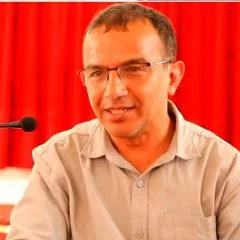
Dr. Govinda S. Upadhyaya is a respected philosopher, counselling psychologist, academician, trainer, and practitioner of applied philosophy and psychological counselling in Nepal. He serves as an Aacharya in the Department of Psychology and Philosophy at Tri-Chandra Multiple Campus, Tribhuvan University, Kathmandu, one of the oldest and most historically significant academic institutions in Nepal. With a distinguished academic and professional identity that bridges philosophy, psychology, classical Hindu thought, and counselling practice, Dr. Upadhyaya has made a meaningful contribution to higher education, philosophy, mental health awareness, counselling training, and the promotion of culturally rooted philosophical and psychological approaches.
At Tri-Chandra Multiple Campus, Dr. Upadhyaya is closely associated with the Post Graduate Diploma in Counselling Psychology (PGDCP) program, where he serves as the coordinator. The PGDCP program is a self-sustained, skill-oriented, and highly regarded academic course that has been running since 2005. Over the years, it has developed a strong reputation for producing trained counselling professionals who can work in educational institutions, community settings, mental health programs, family counselling contexts, social organizations, and various helping professions. Enrolling more than a hundred students annually, the program has become an important platform for developing counselling manpower in Nepal. Under Dr. Upadhyaya’s academic coordination and guidance, the program emphasizes not only theoretical knowledge but also practical skills, ethical sensitivity, supervised practice, and field-based exposure.
Dr. Upadhyaya is widely recognized for his expertise in philosophy, counselling psychology, classical Hinduism, and couple counselling, particularly दाम्पत्य-परामर्श. His academic orientation is rooted in the belief that human suffering, conflict, stress, emotional disturbance, and relational difficulties must be understood through a holistic framework. For him, counselling is not merely a technical process of symptom reduction; it is also a compassionate, dialogical, ethical, and transformative engagement with the human person. This approach allows him to combine modern psychological insights with classical wisdom traditions, especially those derived from Hindu philosophical and spiritual literature.
As a philosopher, Dr. Upadhyaya has a deep interest in questions concerning human existence, values, meaning, ethical responsibility, self-knowledge, social harmony, and inner freedom. His philosophical training gives depth to his counselling practice, enabling him to address not only emotional and behavioural concerns but also existential questions related to purpose, identity, duty, suffering, relationship, and personal growth. He understands human life as an integrated whole in which thought, emotion, conduct, relationship, culture, and spirituality are deeply interrelated.
As a counselling psychologist, Dr. Upadhyaya has played an important role in promoting professional counselling education in Nepal. He is especially known for leading skill-based training, practical counselling sessions, supervised practicum, case discussions, role-play exercises, fieldwork, and experiential learning activities for students. His teaching method goes beyond classroom lectures. He encourages students to develop listening skills, empathy, emotional awareness, ethical discipline, reflective thinking, and professional confidence. In his view, a counsellor must not only understand theories but must also cultivate patience, humility, emotional maturity, and the capacity to accompany clients through difficult life situations.
One of Dr. Upadhyaya’s significant areas of specialization is couple counselling, or दाम्पत्य-परामर्श. In this field, he works with issues such as marital conflict, communication difficulties, emotional distance, mistrust, jealousy, family pressure, adjustment problems, intimacy
concerns, and the psychological challenges that arise within married life. His approach to couple counselling is notable for its cultural sensitivity. He recognizes that marital relationships in Nepal and South Asian societies are shaped not only by individual emotions but also by family structures, social expectations, gender roles, cultural values, religious beliefs, economic responsibilities, and intergenerational influences. Therefore, his counselling perspective seeks to understand the couple within their broader familial and cultural context.
Dr. Upadhyaya’s knowledge of classical Hinduism adds a distinctive dimension to his professional identity. He has studied and interpreted Hindu philosophical, ethical, and spiritual traditions in relation to contemporary human problems. Rather than treating tradition as something merely ritualistic
or outdated, he explores its psychological and ethical relevance for modern life. Concepts such as dharma, self-discipline, compassion, संयम, गृहस्थ-धर्म, mutual respect, forgiveness, responsibility, and inner balance often inform his wider reflections on personal and family well-being. Through this integrative orientation, he contributes to the development of a culturally meaningful model of counselling suitable for Nepali society.
In the PGDCP program, Dr. Upadhyaya places strong emphasis on field-based practicum. He believes that counselling students must be exposed to real-life settings in order to understand the complexity of human problems. Fieldwork enables students to interact with individuals, families, schools, communities, and organizations, thereby transforming theoretical knowledge into practical competence. Under his coordination, students are encouraged to observe, assess, document, reflect, and gradually develop the confidence required for professional counselling work. This practicum-based model has helped make the PGDCP program one of the important counselling training initiatives in Nepal.
Dr. Upadhyaya is also known as a committed trainer who conducts and supports workshops on mental health, stress management, emotional intelligence, digital addiction, family harmony, workplace well-being, and counselling skills. His training style is participatory and practice-oriented. He often combines lectures, discussion, group activities, self-reflection, case analysis, role play, and guided exercises. This method makes his sessions useful for students, teachers, professionals, parents, social workers, and institutional participants.
His professional contribution lies in his ability to connect different domains of knowledge. He brings philosophy into psychology, psychology into counselling, counselling into family life, and classical wisdom into modern mental health discourse. This integrative quality makes him an important academic figure for those who seek a culturally grounded yet professionally sound approach to counselling education in Nepal.
Dr. Govinda S. Upadhyaya’s work reflects a sustained commitment to human well-being, ethical education, counselling professionalism, and the meaningful application of philosophical wisdom in everyday life. Through his teaching, coordination, training, writing, and counselling practice, he continues to inspire students and professionals to understand human beings with greater depth, sensitivity, and responsibility. His contribution to the PGDCP program at Tri-Chandra Multiple Campus has helped strengthen the foundation of counselling psychology education in Nepal and has opened pathways for many learners to become competent, compassionate, and socially responsible counselling practitioners.
Contact : govind_upadhyay(@)trc.tu.edu.np